
Web Summit Reflections: Canada’s Physical AI Moment Can’t Wait
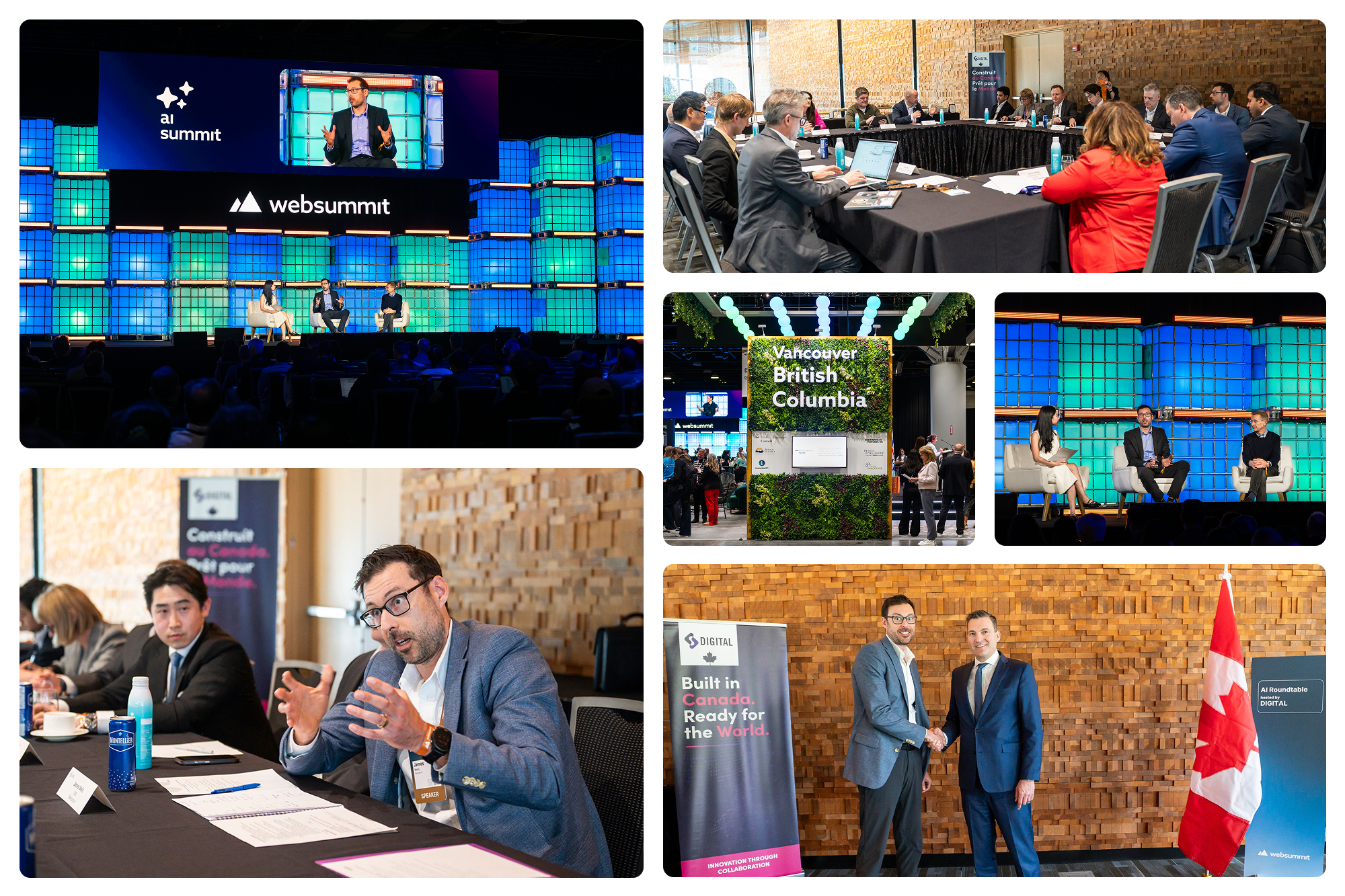
James Wells, CEO at Sanctuary AI, participating in a AI Roundtable with the Honourable Evan Solomon, Minister of Artificial Intelligence and Digital Innovation, and speaking on stage at Web Summit Vancouver 2026.
Last week I had the pleasure of speaking at Web Summit Vancouver, one of Canada’s premier technology conferences hosted right here at home in Vancouver. I joined a panel alongside Kacper Nowicki, co-founder and CEO of Nomagic.ai, to discuss the future of Physical AI-powered robotics.
One theme became clear throughout the discussion: the organizations that adopt and become familiar with these technologies today will be best positioned to capitalize on their rapid evolution tomorrow.
If you believe robotics and Physical AI will continue to improve (and all signs suggest they will), then the greatest advantage will belong to those willing to act early, learn quickly, and integrate these technologies now.
After the panel, I had a number of conversations with journalists, investors, and operators, and that same theme surfaced repeatedly, but at a national level.
The discussion was no longer about which individual companies will adopt, learn and ultimately lead in AI and robotics, but which countries will.
The Race for Physical AI Leadership Has Already Started
Countries around the world are investing aggressively in sovereign AI infrastructure, robotics ecosystems, and domestic innovation capacity. China, in particular, deserves recognition for taking a proactive, long-term approach to supporting innovation and scaling national technology champions.
The countries that win in the era of Physical AI will be those with a coordinated strategy to both develop and deploy these technologies domestically.
Canada has the talent, research institutions, and entrepreneurial ecosystem to compete globally. But if we want to remain competitive, we need to invest in our own technologies, strengthen commercialization pathways, and ensure strategically important technologies remain anchored domestically.
Technological sovereignty may become “labour sovereignty.” We define labour sovereignty as Canada’s ability to control, govern, and benefit from the labour capacity that underpins its economy and critical industries. The risk: if foreign-owned robotic systems perform the work that power Canadian industries, then control over our labour productivity (and subsequently our economic sovereignty) ultimately moves outside Canada.
Canada Cannot Afford to Sit on the Sidelines
The federal government’s recently announced six pillars for a National AI Strategy are an encouraging step forward, particularly around sovereign AI capability, workforce development, and scaling Canadian champions.
Physical AI will soon become as common and transformative as digital AI, integrated across industries from healthcare and agriculture to manufacturing and logistics. As labour shortages grow and demographics shift, these systems will become essential to maintaining Canada’s productivity and economic resilience.
The risk for Canada is not that robots replace workers, it’s that foreign companies develop and own the technologies that fill our labour gaps and power our Canadian industries.
It’s Time to Make a National Bet
Canada has an opportunity to move from being a country known for AI research to one known for deploying and scaling world-leading AI and robotics companies.
One of the most encouraging trends is the growth of major technology events across Canada. These gatherings help bring together founders, policymakers, researchers, and industry leaders to shape a shared vision for the future.
Canada has the credibility, talent, and ecosystem to lead in the next era of AI and robotics. The next step is coordinated national action that supports domestic innovation, commercialization, and deployment at scale.
Our long-term prosperity and technological sovereignty depend on it.
